

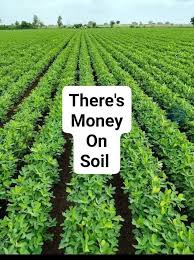
In the world of agriculture, we’re often told that more sweat equals more money. But in any other business, that’s called a lack of systemization. If you’re working harder than your soil, you’re leaving money on the table.
Strategy 1 High leverage on perennial crops
Today, together with fellow farmers, we’re breaking down the strategic farmer framework. How to build systems that maximize your profit while drastically reducing your manual labor. First, stop fighting the replanting cycle.Annual crops are high maintenance. They require constant tilling, seeding, and attention. If you want to scale, you need to think about perennials.Crops like fruit orchards, berries, or specialty asparagus are set and forget assets. You plant them once and they pay you dividends for years. By building deep root systems, they become more resilient and less water dependent over time, allowing you to focus on marketing rather than tilling.
Strategy 2 Systemizing inputs
If you are still dragging hoses across a field, you aren’t a farmer. You’re a manual laborer. Your time is worth more than a $20 solar-powered timer. By implementing gravity-fed drip irrigation and automated fertigation, you remove human error from the growth cycle. Automation ensures your crops get exactly what they need, precisely when they need it, while you focus on high-level farm management or simply taking a well-earned break.
Strategy 3 bio automation
Stop fighting nature with heavy machinery. Every time you till, you’re destroying the microbial workforce that creates free fertilizer. By shifting to a no-till method combined with heavy mulching, you’re essentially hiring the soil to work for you. Mulch suppresses weeds naturally and retains moisture, meaning you spend zero time weeding and significantly less money on external inputs.Your soil health improves every year and your workload decreases every year. It’s compounding interest for your farm.
Strategy 4 The niche to profit pivot
Finally, stop competing in a race to the bottom with low-margin commodities like corn or soy.If you have limited space or time, you must pivot to high-value niche crops. Specialty herbs, gourmet mushrooms, or microgreens take up a fraction of the space but sell for triple the price at local markets. This is about high-density profit, not high-density labor.It’s better to earn $1,000 from a small greenhouse than $1,000 from five acres of back-breaking work. Being a strategic farmer isn’t about being lazy. It’s about being an efficient CEO of your land.Start small, automate your systems, and let nature do the heavy lifting.
Conclusion
The era of “more sweat equals more money” in agriculture is over. In today’s competitive world, the most successful farmers are not those who work the hardest, but those who work the smartest. By shifting from annual crops to high-leverage perennials, systemizing inputs through automation, embracing bio-automation via no-till and mulching, and pivoting to high-value niche crops, you transform your farm from a labor-intensive operation into a profitable, self-sustaining system.Strategic farming is not about doing less it’s about achieving more with less effort. It means building systems that allow your land, your soil, and your crops to generate returns while you focus on growth, marketing, and enjoying the fruits of your labor. The soil is already willing to work for you. The technology is affordable and accessible.
The only question left is: Are you ready to stop being a manual laborer and start becoming the CEO of your farm?Start small, stay consistent, and let your systems compound both in soil health and in profit. The future of profitable, low-stress farming belongs to the strategic farmer.