

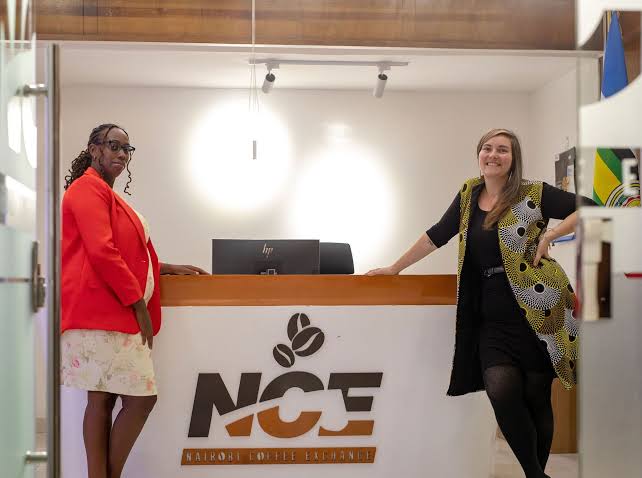
The ongoing legal battle in Kenya between the Coffee Brokerage Association of Kenya (CBAK) and the Nairobi Coffee Exchange (NCE) serves as a critical wake-up call for novice farmers regarding the transparency of the local coffee value chain.
At the heart of this High Court case is the allegation that the NCE is operating without the necessary licenses and statutory framework required by the Capital Markets Authority (CMA). For a new Kenyan farmer, this highlights why “governance” matters: when the national auction lacks proper oversight, there is a higher risk of price manipulation or delays in payment. This lawsuit is essentially a push for demutualization, a process intended to turn the NCE into a modern, transparent business that prioritizes the interests of Kenyan producers over intermediaries.
How the Direct Settlement System (DSS) Protects Kenyan Farmers
Understanding the Direct Settlement System (DSS) is your greatest advantage as a farmer in Kenya. Introduced as part of a presidential directive, this banking facility—currently managed by the Co-operative Bank of Kenya—was designed to bypass old, slow payment routes where money often sat in cooperative accounts for months. By using a centralized platform regulated by the Central Bank of Kenya, the DSS ensures that proceeds from your coffee sales are split automatically. This system identifies your coffee delivery via a Unique Special Code and sends the payment directly to your designated bank or mobile money account. This prevents the “diversion” of funds, ensuring your money is not used by a cooperative to pay off unrelated debts without your consent.
Current Market Prices: Premium Quality Still Wins
As of April 2026, the Nairobi Coffee Exchange shows a “two-speed” market where high quality is heavily rewarded. In recent sales, Grade AA averaged USD 335.66 per 50kg bag, while Grade AB averaged USD 328.21. Top-performing lots have recently reached as high as USD 400 to USD 505.
According to notices released on April 21, 2026, the following factories under Barichu Farmers Co-operative Society in Nyeri County have officially declared payouts over KSh 130 per kg:
- Karindundu Factory: KSh 136.90 per kg
- Gatomboya Factory: KSh 134.10 per kg
- Gaturiri Factory: KSh 130.80 per kg
- Karatina Factory: KSh 130.30 per kg
Upcoming Public Participation and Revitalization Meetings
Due to the Kerugoya High Court suspending the mandatory implementation of the DSS until May 20, 2026, the government is conducting nationwide sensitization and public engagement forums to meet statutory requirements. Below are the key upcoming and recent forums led by the Ministry of Co-operatives and MSME Development.
- Baringo County: A Coffee Revitalization Sensitization Meeting will be held at Kabarnet High School Grounds on April 22, 2026.
- Embu County: The Deputy President will lead a Coffee Farmers Engagement Forum at Kavutiri Coffee Mill Grounds on April 26, 2026.
- Taita Taveta County: Sensitization forums were recently concluded in Wundanyi (April 15, 2026) to align local farming with national reforms.
- Tharaka Nithi County: Grassroots engagement with leaders from Chuka Igamba Ngombe recently took place on April 18, 2026 to discuss reform impacts.
The Step-by-Step Process to Secure Your Unique Special Code
To benefit from the DSS and track your coffee, you must obtain a Unique Special Code. This process links your physical harvest to your bank account:
- Registration: Visit your local Coffee Co-operative Society or your County Agricultural Office with your National ID and KRA PIN.
- Verification: The County Government, in consultation with the Agriculture and Food Authority (AFA), verifies your farm’s acreage to prevent illegal side-selling.
- Code Issuance: Once verified, you are assigned a permanent digital code. This code must be clearly indicated on every delivery note when you take your cherry to the factory.
- Bank Linkage: Link this code to an account at a DSS-approved bank to ensure you are credited automatically when your coffee is sold.
Local Contact Information for Registration
Nyeri County Department of Agriculture
- Main Office: P.O. BOX 1112 – 10100 Nyeri.
- Telephone: 061 203700 or the County Hotline at 0721 019019.
- Kilimo Call Centre: 0729 233696 for professional advisory services.
Kirinyaga County Department of Agriculture
- Agricultural Office: Ushirika Bank House, 3rd Floor, Room 1, Kerugoya.
- County Government Headquarters: +254 20 8010181.
Would you like to know the specific documents required to register as a “Grower-Miller” if you wish to bypass local factories and sell your coffee directly?
Conclusion
The ongoing legal battle between the Coffee Brokerage Association of Kenya and the Nairobi Coffee Exchange is more than just a court case — it is a defining moment for Kenya’s coffee sector. For novice and smallholder farmers, it sends a clear message: transparency, proper governance, and direct payment systems like the DSS are no longer optional but essential for fair earnings. By embracing the Unique Special Code, supporting demutualization, and actively participating in public forums, Kenyan farmers can move from vulnerability to empowerment. The future of profitable coffee farming lies in a transparent, farmer-centered value chain where quality is rewarded and payments reach producers quickly and safely. Now is the time to register, get your code, and become part of a modern, accountable coffee industry that truly works for you.