

How to Start Layers & Broiler Farming in Kenya 2026. This is one of the most rewarding agribusiness ventures for both smallholder and aspiring commercial farmers in Kenya. It involves rearing domesticated birds such as chickens, ducks, turkeys, and quails primarily for meat and egg production.
This enterprise offers quick returns on investment, improves household food security, and serves as a reliable source of income. Farmers can operate at different scales, from small backyard units to large commercial setups , using systems such as free-range, semi-intensive, or fully intensive deep-litter methods.
Poultry farming
The two most popular types of chicken farming in Kenya are layer production for eggs and broiler production for meat, while improved Kienyeji (indigenous) chickens remain a favorite for many due to their hardiness and premium market prices.
Choosing Between Layers and Broilers
When starting poultry farming, it is important to decide whether to focus on layers or broilers, as each has different requirements and income patterns.
layers farming
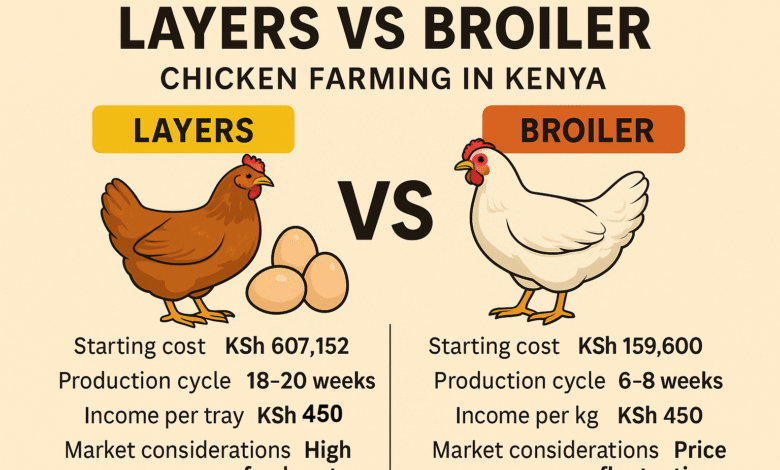
Layer birds are raised mainly for egg production. Popular commercial breeds such as Lohmann Brown, Hyline, and ISA Brown can produce between 280 and 320 eggs per bird per year under good management. Layers require patience because they start laying at around 18 to 20 weeks of age, but once they begin, they provide steady daily or weekly income for 18 to 24 months.
Broiler farming
On the other hand, broilers are fast-growing meat birds that reach market weight of 1.8 to 2.5 kilograms within 5 to 8 weeks. Breeds like Cobb, Ross, and Hubbard are commonly used.
Broilers offer quicker returns, making them ideal for farmers who need fast cash flow, although they consume more feed and are more sensitive to management mistakes. Many beginners start with broilers to gain experience before venturing into layers.
Improved kienyeji
Improved Kienyeji chickens can also be a good middle option as they combine disease resistance with reasonable growth and egg production.
Essential requirements for successful poultry farming
Successful poultry farming begins with proper housing. A good poultry house should provide adequate space, excellent ventilation, and protection from predators, rain, and extreme temperatures.
Overcrowding must be avoided because it leads to stress, cannibalism, slow growth, and disease outbreaks. The floor should use a deep litter system with materials such as wood shavings or rice husks, which should be kept dry and turned regularly to prevent dampness and ammonia buildup.
For layers, sufficient lighting (at least 16 hours per day) is necessary to stimulate consistent egg production.
Feeding is another critical aspect since it accounts for 60 to 70 percent of the total production cost. Birds should be fed consistently at the same time every day with clean, fresh water always available.
Chicks from zero to eight weeks require chick mash for fast and strong growth. From eight to twenty weeks, growers mash supports steady development. Once layers reach point of lay, they need layers mash, which is rich in calcium to support strong eggshell formation.
Broilers require high-energy starter and finisher feeds to achieve rapid weight gain. Supplementing with greens and kitchen leftovers can help reduce feed costs as the birds grow older.
Vaccination plays a vital role in protecting the flock from deadly diseases. Many beginners lose entire batches by ignoring this important step. A proper vaccination programme acts as insurance for your investment.
Common vaccines include
- Newcastle Disease at week one and four,
- Gumboro at weeks two and three,
- Fowl Pox between weeks six and eight, and
- a final Newcastle booster for layers between weeks sixteen and eighteen.
It is advisable to vaccinate early in the morning using clean water and to follow a schedule recommended by a local veterinarian, as slight variations may apply depending on your area.
General tips for beginner poultry farmers
To succeed in poultry farming, start small with 50 to 200 birds so you can learn and manage the enterprise effectively before scaling up. Always buy day-old chicks or point-of-lay pullets from reputable hatcheries to ensure good genetics and health.
Maintaining strict hygiene and biosecurity is essential, clean feeders and drinkers daily, disinfect the house between batches, and use a footbath at the entrance. Keep accurate records of feed consumption, mortality, egg production, and expenses to help you monitor performance and profitability.
Practice good ventilation, control rodents and pests, and provide vitamins and electrolytes during stressful periods such as vaccination or hot weather.
Proper marketing is also key; broilers can be sold to butcheries, hotels, and markets, while eggs sell well to shops, supermarkets, and institutions. Timing your production to meet high-demand periods can significantly increase your profits.
Conclusion
With proper planning, good housing, quality feeding, timely vaccination, and strict hygiene, poultry farming can become a sustainable and profitable business for Kenyan farmers. Whether you choose layers for steady income or broilers for quick returns, success comes through patience, discipline, and continuous learning.
Start small, manage your flock well, and reinvest your profits wisely.
Many farmers have transformed their livelihoods through poultry keeping, and you too can achieve the same results.
For more practical farming guides, current market prices for eggs and chicken, and connections to reliable buyers, visit Agrispark.co.ke — your trusted partner in modern agribusiness.
Begin your poultry journey today with confidence and watch your small investment grow into a rewarding enterprise. Happy farming!