

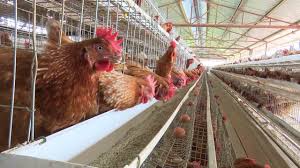
Layers farming, is in the heart of Kenya’s booming livestock sector. This is soaring ahead as the undisputed champion of growth. What’s fueling this explosive rise?
There is a simple explanation for this explosive rise. Eggs are in sky high demand across the country prized for their exceptional nutritional value, affordability, and incredible versatility in the kitchen.
Whether it’s a quick family breakfast, school feeding programs, hotel menus, or bustling urban markets, eggs have become a daily staple. Kenyans simply can’t get enough of the eggs on their diet.
Behind this surging appetite lies a massive opportunity. Kenya produces roughly 4 billion eggs annually but consumes closer to 9 billion, creating a persistent gap that local farmers are racing to fill.
This supply and demand imbalance, has turned layer farming into one of the most promising agribusiness ventures today. This offers a steady income, quick returns, and scalability for both smallholders and commercial producers.
Breeds of Layers
Layers are high producers of eggs. They have a long production period and high peak production. These are the four breeds of the commercial Layers in Kenya
ISA Brown,
Hy-Line Brown,
Lohmann Brown, and
Bovans Brown (sometimes referred to alongside or as variants of Shaver lines in local markets).
These hybrid breeds layers dominate commercial egg production due to selective breeding for superior egg output, feed efficiency, and adaptability to Kenyan conditions.
ISA Brown
The ISA Brown is one of the most popular and widely kept commercial layer breeds in Kenya. It is renowned for its early maturity (starting to lay around 18–20 weeks), calm temperament, and high productivity.
Farmers report annual egg production of 280–320 brown eggs per hen. I would like to clarify that this is only achieved under good management, with strong market demand for its rich brown-shelled eggs.
ISA brown layers performs well in both small-to-medium scale operations and has good livability. Its docility makes it easier to manage in various systems, including deep litter or semi-intensive setups common in Kenya.
Hy-Line Brown
The Hy-Line Brown layers are favored for its consistency, excellent feed efficiency, and strong egg shell quality. It is a balanced breed that produces around 300+ brown eggs per year, often approaching higher totals in extended cycles (up to nearly 500 eggs in 100 weeks in optimal conditions).
Hy line layers begins laying early with good egg size. From the start the breed shows strong performance in commercial settings. This breed is hardy and adapts well, making it suitable for larger-scale farms where feed conversion and egg quality directly impact profitability.
It is particularly noted for its interior egg quality and nesting behavior.
Lohmann Brown
Lohmann Brown layers are valued for their high egg numbers (often 300–310+ per year), uniform brown eggs, and adaptability to local Kenyan conditions, including areas with potential disease pressure.
They exhibit strong immunity and a long laying cycle, with peak production remaining high for extended periods. This breed starts laying around 18 weeks and is known for robust performance. This makes it a reliable choice for farmers seeking steady output with good persistency.
It thrives under proper biosecurity and management practices.
Bovans Brown
The Bovans Brown layers is a versatile and robust layer known for high peak production, excellent laying persistency, and a flat egg weight curve that results in consistent, top-quality dark brown eggs.
It is easy to manage across different housing systems (cages, aviaries, or free-range) and shows strong feed intake capacity. This allowing it to express its genetic potential even in multi-age flocks or varied environments. This breed combines high output with durability, contributing to its growing popularity among Kenyan commercial producers.
These four commercial breeds are typically supplied as day-old chicks or point-of-lay pullets. Major Kenyan hatcheries and companies like Kenchic, emphasize qualities such as livability above 93%, point of lay at around 18 weeks, peak production over 95%, and efficient feed conversion (around 6 eggs per kg of feed).
With good management, hens from these breeds can maintain high production from 18 to 80+ weeks, yielding over 300–330 eggs in the first 62 weeks of lay.
Layers industry growth
Kenya’s layer sector is expanding rapidly because these high-performing hybrids address the massive demand for eggs. The country produces approximately 4 billion eggs annually but faces a demand of around 9 billion, resulting in a significant import gap of about 5 billion eggs each year.
This deficit creates strong market opportunities for local producers. Eggs remain a staple due to their affordability, nutritional benefits (high in protein, vitamins, and minerals), and versatility in Kenyan diets from household meals to use in baking, hotels, and schools.
Commercial layers outperform indigenous or improved dual purpose birds (such as KARI Improved Kienyeji, Kenbro, Kuroiler, or Sasso, which may lay 180–250 eggs annually but offer better hardiness and lower input costs for smallholders).
The commercial breeds provide faster returns through higher volume and better feed-to-egg ratios, though they require quality feed, vaccination, biosecurity, and proper housing to minimize mortality and maintain peak output.
Benefits of the layers breeds
Farmers choosing these breeds benefit from:
- High productivity — Early lay and long production cycles.
- Egg quality — Uniform size, strong shells, and preferred brown color in the Kenyan market.
- Efficiency — Better feed conversion supports profitability amid rising feed costs.
- Scalability — Suitable for both small-scale (100–500 birds) and large commercial operations.
Layers farming management practices
Success depends on key management practices. Balanced layer feed (with adequate protein and calcium), clean water, disease control (e.g., Newcastle, Gumboro, Fowl Pox vaccinations), and appropriate housing to reduce stress and predation.
Many farmers achieve 75–95% laying rates with disciplined routines.
Layers Opportunities and Considerations
Layer farming offers a reliable income stream in Kenya, supporting food security and livelihoods across rural and urban areas. With growing urbanization and awareness of egg nutrition, demand continues to rise. However, challenges like feed costs, disease outbreaks, and market fluctuations require planning.
New entrants should start small, source quality chicks from reputable suppliers, and focus on biosecurity. Overall, the ISA Brown, Hy-Line Brown, Lohmann Brown, and Bovans Brown remain the backbone of Kenya’s commercial layer industry, powering its status as the fastest-growing livestock sub-sector and helping close the national egg supply gap through efficient, high-output production.
Farmers investing in these breeds, combined with sound management, are well-positioned to capitalize on the booming demand for eggs.
Conclusion
As Kenya’s population grows and demand for nutritious, affordable protein continues to surge, chicken layer farming stands out as one of the most rewarding and future-proof agribusiness opportunities in the country.
With the right choice of high-performing commercial breeds — ISA Brown, Hy-Line Brown, Lohmann Brown, and Bovans Brown farmers can achieve impressive egg production of 300+ eggs per hen per year, turning what was once a backyard activity into a profitable commercial venture.
The sector’s rapid growth is no accident. Driven by eggs’ unmatched nutritional value, ease of preparation, and consistent market demand, layer farming offers quick returns, job creation, and a reliable path to food security and wealth creation for both small-scale and large-scale producers.
However, success does not come by chance. It demands quality chicks from reputable suppliers, proper housing, balanced feeding, strict biosecurity, and sound management practices.
Farmers who invest in these fundamentals are consistently reaping the rewards of high peak production, excellent feed efficiency, and strong egg quality that the Kenyan market loves.
Whether you are a seasoned farmer looking to expand or a newcomer seeking a lucrative agribusiness, layer chicken farming in Kenya is wide open with opportunity. By embracing the top commercial layer breeds and committing to best practices, you can become part of the solution to Kenya’s egg deficit while building a sustainable and profitable enterprise.
The future of eggs in Kenya is bright and it is being laid one golden egg at a time by forward-thinking farmers who have chosen to ride the wave of this fastest-growing livestock sector.